· Intelligent Remanufacturing · Engineering Design · Robotics · Product Recovery
1- Robotic Disassembly and Human-Robot Collaboration
· Autonomous Systems · Robotic Disassembly · Human-Robot Collaboration · Perception · Planning · Human Safety
Our research develops robotic and human-robot collaborative systems for the disassembly of complex end-of-use products. Product disassembly presents major challenges for automation because products differ in condition and configuration, disassembly sequences may change, and robots must perform tasks safely in environments shared with human workers. We investigate robotic perception, disassembly sequence planning, task allocation, human intention recognition, motion prediction, robot capability assessment, and safe human-robot interaction. The research advances robotics, optimization, sensing, human factors, and data-driven methods to improve coordination between human and robotic capabilities. The goal is to create safe and intelligent disassembly systems that support future remanufacturing and product recovery operations.


2- Intelligent Manufacturing and Remanufacturing
Intelligent Manufacturing · Remanufacturing · Digital Twins · Predictive Modeling · Lifecycle Data · Decision Making
Our research advances intelligent manufacturing and remanufacturing systems that respond to product variability, uncertain operating conditions, and changing lifecycle information. Remanufacturing often involves products with different ages, conditions, usage histories, and remaining values, which creates uncertainty in inspection, processing, and recovery decisions. We develop computational models, digital twins, predictive methods, and decision-support frameworks that use physical and lifecycle information to improve these decisions. The research examines how product and process data can support inspection, maintenance, remanufacturing, component reuse, and value recovery. The goal is to create adaptive manufacturing and remanufacturing systems that respond to the condition, history, and remaining value of individual products.


3- Sustainable Product Recovery and Circular Systems
Product Recovery · Circular Systems · E-Waste · Batteries · Reuse · Recycling · Lifecycle Assessment
Our research investigates methods to preserve and recover the functional, economic, and material value of end-of-use products. We develop lifecycle and systems-based approaches to support decisions related to repair, reuse, remanufacturing, repurposing, and recycling and considering product condition, remaining life, environmental impacts, and recovery opportunities. Major application areas include electronic waste, consumer electronics, batteries, and other technology-intensive products. The research combines lifecycle assessment, mathematical modeling, product data, and recovery decision methods to identify opportunities for extending product and component life and reducing resource losses. The goal is to advance circular product systems that retain products, components, materials, and embedded value for longer periods of productive use.


4- Engineering Design and Product Lifecycle
Engineering Design · Product Lifecycle · Repairability · Design for Disassembly · Sustainable Design
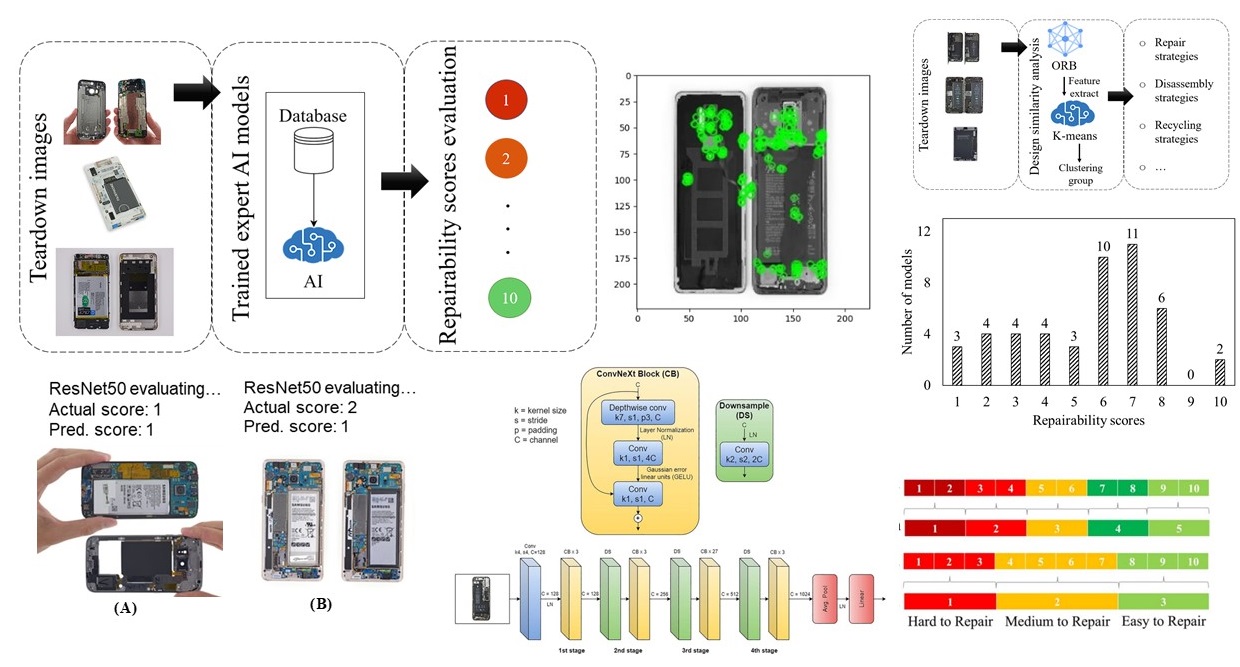
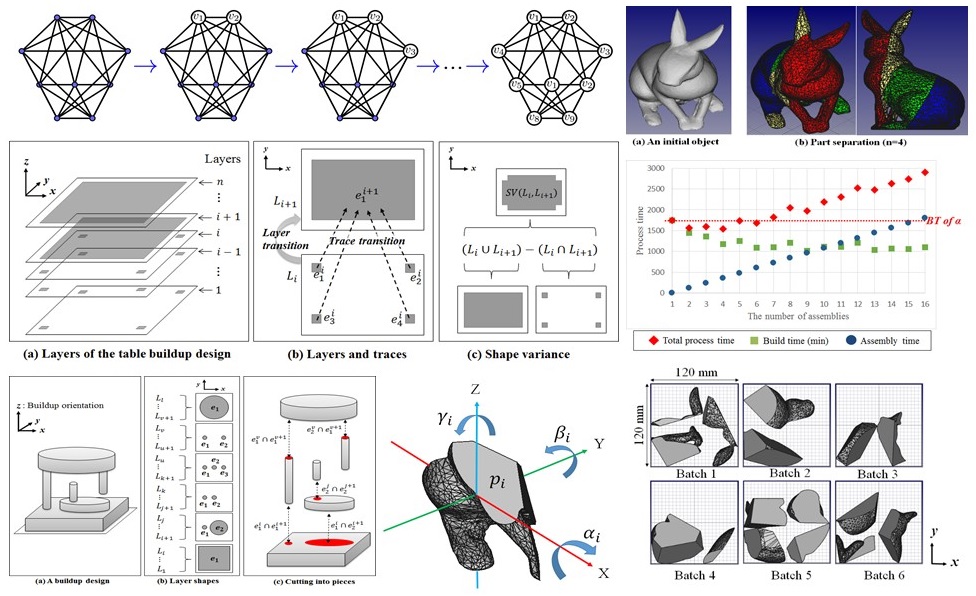
Our research develops engineering design methods that connect early-stage design decisions with product performance throughout the lifecycle. We investigate how product architecture, component relationships, material selection, joining methods, and other design characteristics influence durability, repairability, disassembly, reuse, and recovery. A central goal is to provide designers with systematic approaches for evaluating lifecycle consequences before products enter use. Our work combines engineering design theory, computational modeling, optimization, product data, and data-driven analysis to characterize complex relationships between design decisions and lifecycle outcomes. Applications include automated assessment of product repairability, design for multiple life cycles, design for disassembly, and recovery-oriented product development. Through this research, we seek to establish design principles and decision-support methods that enable products to retain functionality, usability, and value over extended and multiple life cycles.